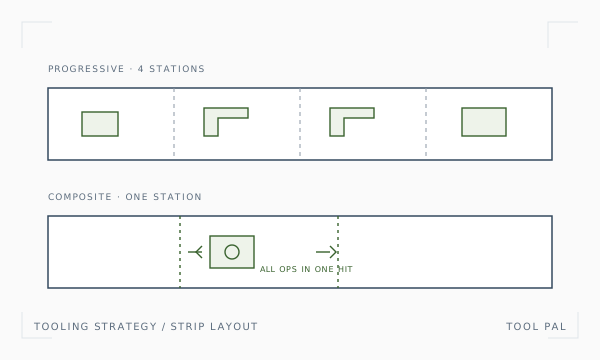
Progressive or composite? Choosing a tooling strategy
The volume, part size and press decide more than the tooling price does.
A tool, a part, a drawing that does not exist yet, or a process that will not behave. Pick the nearest description and we will take it from there.
Choose a starting point
Turret punch, press brake, power press, composite, progressive, special tools or molds.
02Send the sample. We will measure it, rebuild the specification and make it manufacturable.
03Machine selection, tooling compatibility, capability and cost — reviewed with a written action list.
04Prototypes, tool components and job work across VMC, CNC turning, wire EDM and grinding.
One accountable partner
Most tooling problems are not isolated to the tool. They sit between the part design, the press, the material and the maintenance routine. Keeping engineering and manufacturing together means those interfaces get examined, not passed around.
TAC PAL handles the engineering and precision manufacturing. TOOL PAL handles the sheet metal tooling. The same team answers for both.
TOOL PAL
Every family is built around a production requirement — not a catalogue page. Tell us the press, the material and the feature.
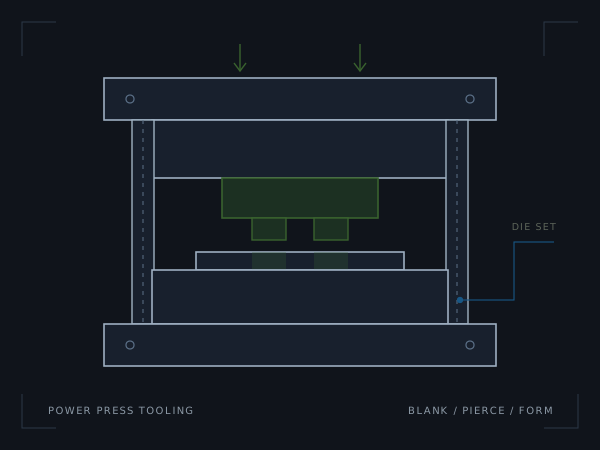
Power press
Blank, pierce, form and draw dies for conventional and hydraulic presses.
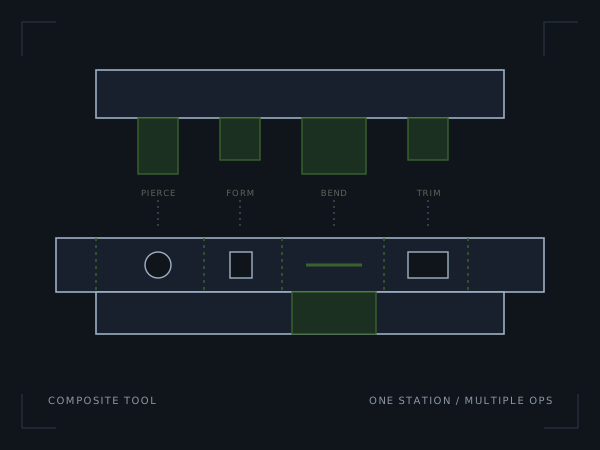
Composite
Several operations in a single station, where one hit has to do more.
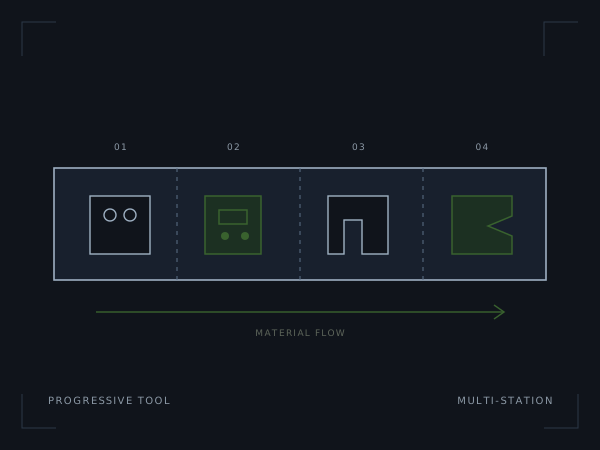
Progressive
Multi-station progression for parts where volume justifies the tool.
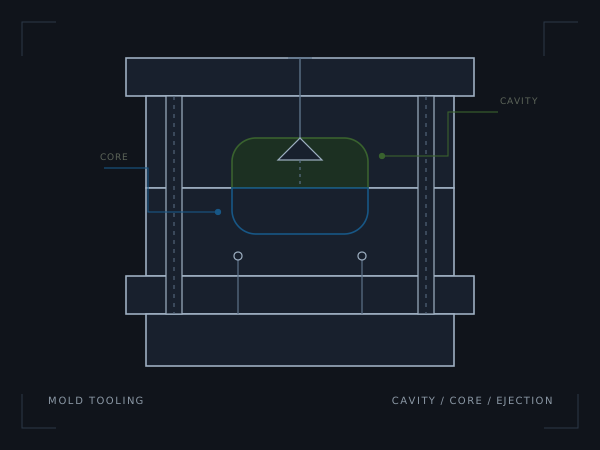
Molds
Cavity and core work with design and build support for component production.
Capabilities at a glance
You do not have to arrive with a fully formed brief. Most engagements start with a drawing, a sample, a photograph or a production problem.
Product and tool design, feasibility and drawing support.
Sample to CAD to a documented, repeatable specification.
Machine and tooling selection, process review, action list.
Samples and first-off parts before production commitment.
Tool components, prototypes and production job work.
Insights
Short technical notes from the people who build and trial the tools.
The volume, part size and press decide more than the tooling price does.
Four symptoms that usually mean the process, not the operator, needs a review.
What we measure first when a part arrives with no drawing and years of wear.
No wrong starting point
A drawing, a photograph, a sample or a sentence about the problem. We will ask for the rest.